HIST 251: Discussion 1 Assignment
HIST 251. American History since 1865
Instructor: Dr. Eduard Baidaus
Lakeland College – Lloydminster Campus
School of University Transfer
Topic 1: Industry and Empire
Key Statement:
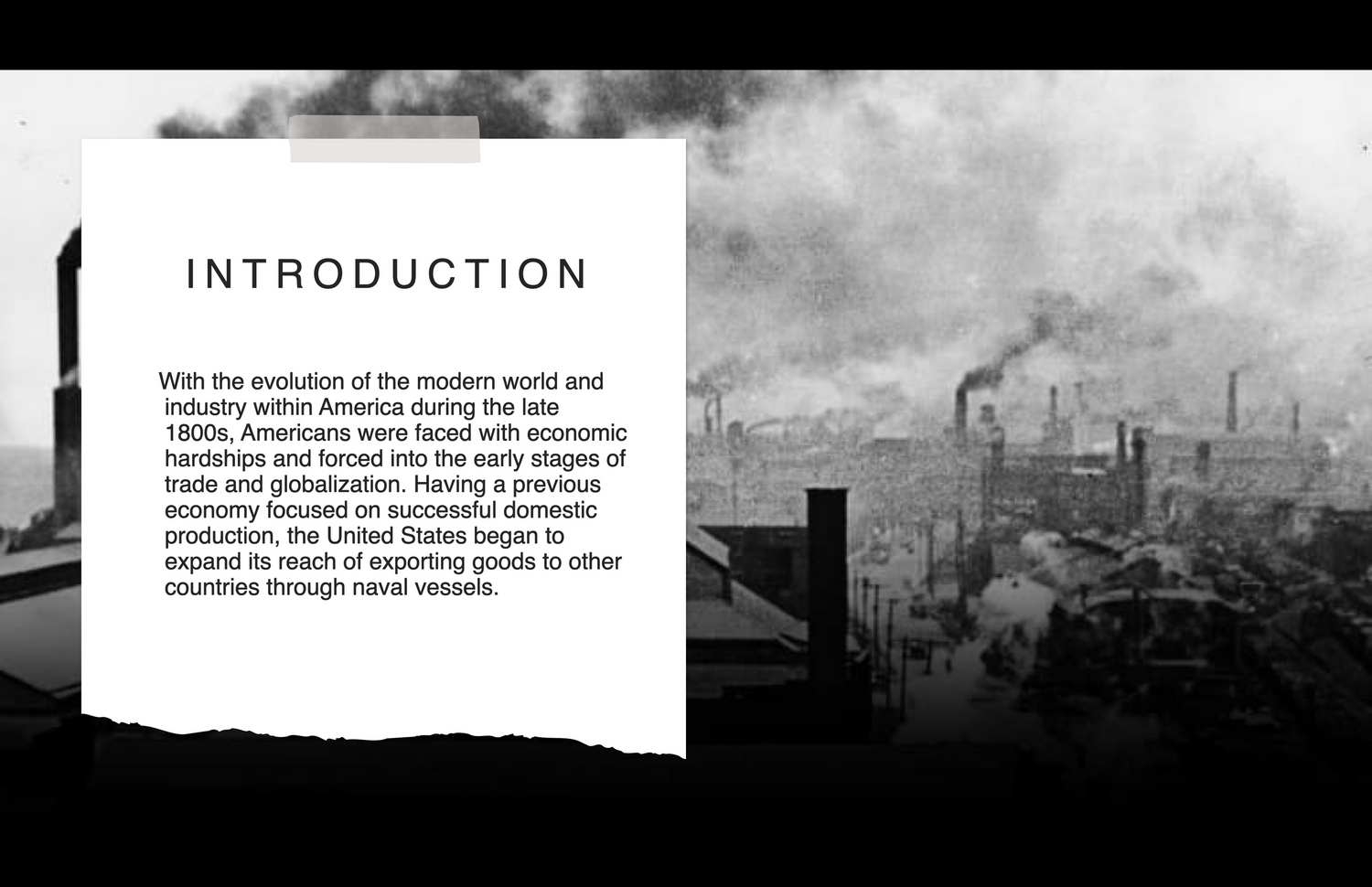
With the evolution of the modern world and industry within America during the late 1800s, Americans were faced with economic hardships and forced into the early stages of trade and globalization. Having a previous economy focused on successful domestic production, the United States began to expand its reach of exporting goods to other countries through naval vessels.
Paragraph:
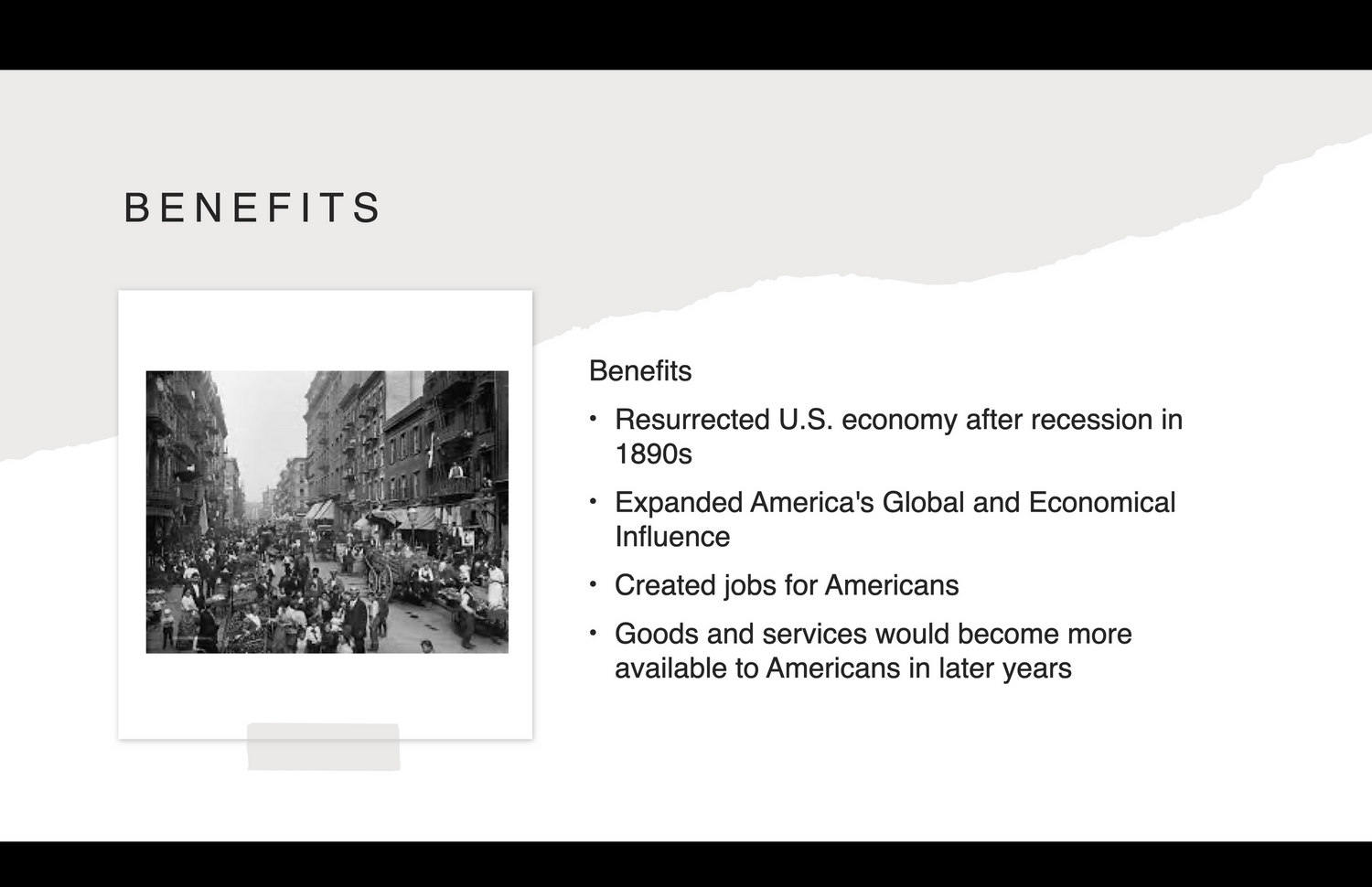
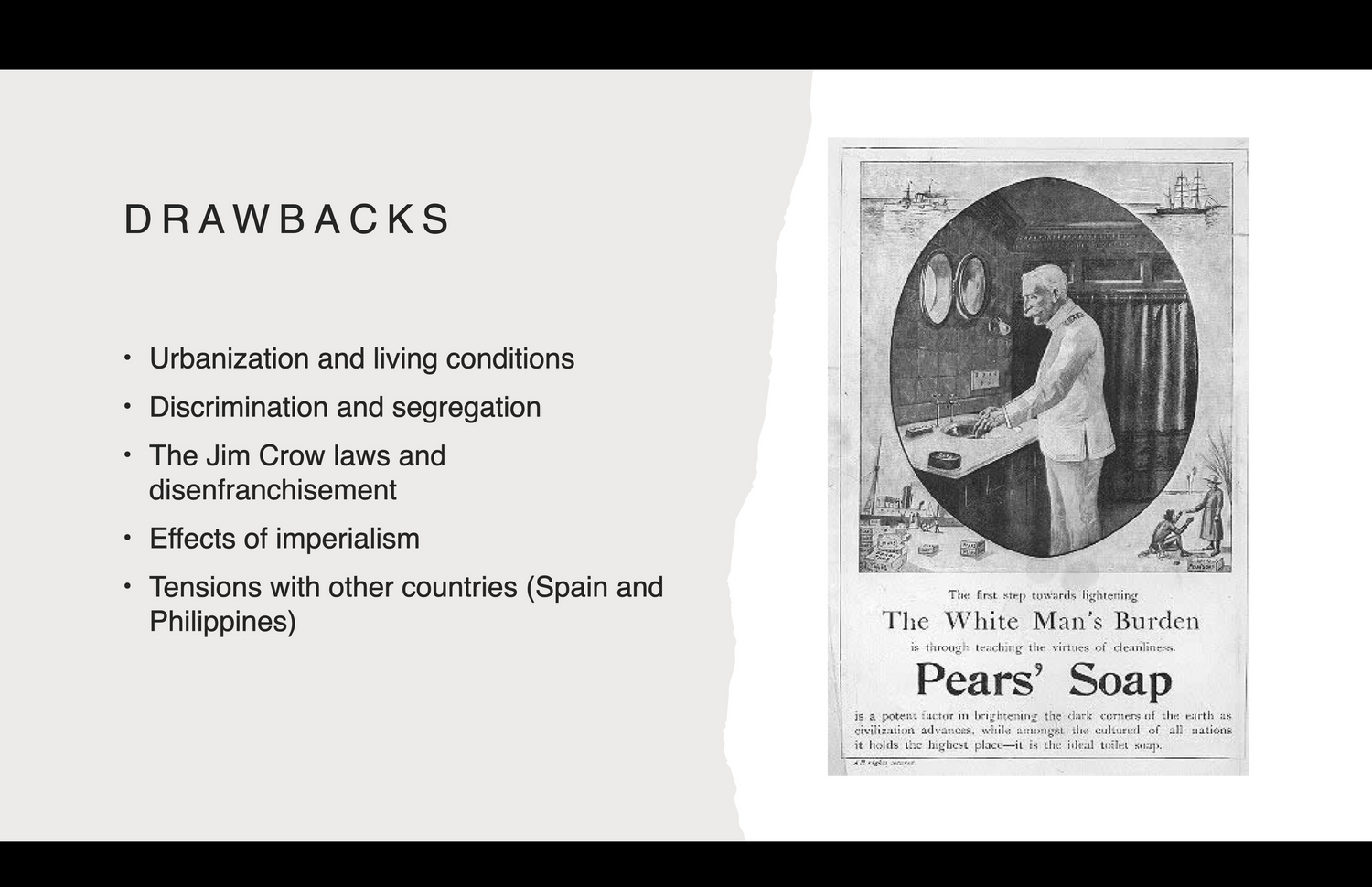
With the rate and quality of production changing, many workers were pushed to their limits, experiencing worker dissatisfaction leading to events such as the Pullman Strike and new labour unions searching for socio-political reform. With economic powerhouses such as J.P. Morgan, monopolies began to form within the United States. Furthermore, the battle between Americans adhering to the gold or silver standard within the global market and political votes reflecting the opinions of the people was concluded when William McKinley was voted in as president in the election of 1896. Overall, this adaptation of globalization resurrected the economy and improved steadily after 1895, establishing themes of urbanization within America and the rise of discrimination and segregation within the country through the invention of the Jim Crow laws and disenfranchisement. With efforts to establish prosperous colonies, the American empire began to advance its economic reach in the global market. It also faced tensions with other countries, such as Spain and the Philippines. Overall, the recovery of the American economy and the success of military initiatives within this decade would set up the early stages of America’s involvement in the modern world.
Topic 2: A Global Power
Key-Statement:
Along with global influence come responsibilities and decisions that affect the world. With the United States as a newfound global superpower and militarized nation, the neutrality or allyship of America holds great importance in wars and conflicts. Other countries began to understand this and utilized propaganda, resources, and deals to sway America’s opinion and stance on certain matters.
Paragraph:
One major event that was very apparent was the First World War. With events and concepts such as the sinking of the Lusitania, the Zimmerman Telegram, propaganda, and possible economic growth, America decided to join the war effort, which in turn helped turn the outcome of the war, specifically on the western front. With capitalism in full swing throughout a booming economy in America, suspected communists began to spring up, starting off the red scare in the United States. This red scare still has apparent effects today and was even feared in the creation of labour unions even though the terror of the red scare subsided. The next wave of the red scare would not appear until the beginning of the Cold War.
Topic 3: The Modern Nation
Key-Statement:
An economy fuelled by industry, innovation, and manufacturing, the roaring twenties were a time of prosperity and recreational opportunities in America.
Paragraph:
With the introduction of mass production and the assembly line by Henry Ford, job opportunities in city factories were more prevalent, leading to the urbanization of rural residents to larger city centres. This led to a decline in agriculture and an increase in industry throughout the nation. Large- scale production began to take form, creating a mix of happy and unhappy workers depending on their industry. To combat unhappiness among workers, corporations promoted welfare capitalism to prove that worker unions were not necessary. Furthermore, the population of the middle class increased throughout this era, leading to the consumerism of recreational activities and products in America. These may include theatre, automobiles, music, dance, and radio programs. Furthermore, there was more acceptance in the cities of sexual attitudes and behaviours and gender ideals. Family dynamics also changed as child-labour laws helped prevent kids from participating in the productive working group. Although this decade was a time of prosperity for white Americans, those of visible minority were still treated as second-class citizens.
Topic 4: A Great Depression and A New Deal
Key-Statement:
During the 1930s, the United States economy fell into collapse after the stock market crashed on the day known as Black Tuesday. Not only was the stock market responsible for the Great Depression, but so were other causes, such as structural flaws in national and international economies and poor government policies. There were also severe droughts in the Dust Bowl, which affected agriculture.
Paragraph:
Due to this economic catastrophe, many Americans were left unemployed and forced to live in Hoovervilles, leading the American Federal Government to establish the New Deal programs under the leadership of President Franklin D. Roosevelt after the election of 1932. This New Deal Program aimed to restore prosperity in America through government relief programs such as the Civilian Conservation Corps and Tennessee Valley Authority, giving young unemployed men environmentally based jobs. During this time, the previously disregarded labour unions from the 1920s were organized and leaped by the millions. The New Deal did not end the Great Depression. However, it did act as a social safety net for Americans during the difficult times of the recession.
Topic 5: The Second World War
Key-Statement:
During the Second World War, America took quite a few years to aid the allies' war effort. The country was divided into isolationists who believed that the war was not America's issue and the internationalists who believed that the United States should help defeat the Nazis and Japanese. It wasn't until after the events of Pearl Harbour that the divide between the isolationists and internationals dissipated, as all Americans now viewed the war as America's problem.
Paragraph:
America's involvement turned the tide regarding the events of the war, giving the Allies a significant advantage in battle. The war officially concluded once America dropped the atomic bomb on Hiroshima and Nagasaki. Not only did America fight the war with force, but they also used their powerful economy to their advantage, creating prosperity within the nation for Americans. This wartime economy was also excellent for women's involvement in the workplace, as there were not enough men to meet the demand for workers. Although America did a lot of good for the Allies during the Second World War, they also made many mistakes in hindsight, such as establishing Japanese Internment Camps throughout the country and wrongly treating so many innocent people of Japanese heritage.