Field Experience 1
October 2022
My Experience
In the fall of 2022, I had the pleasure to complete my EDUC 440 field experience 1 observation in a Grade 9 Social Studies and Grade 10, 11, 12 History classes at Holy Rosary High School in Lloydminster, Alberta. Social studies is the teachable area I am majoring in to complete my Bachelor of Education degree. Throughout this observation, I learned a variety of classroom management techniques, lesson planning and organization, school regulations and policies, differing forms of assessment, and more! Furthermore, I had the opportunity to interact with many of the students and educators, and got to lead various class discussions and activities.
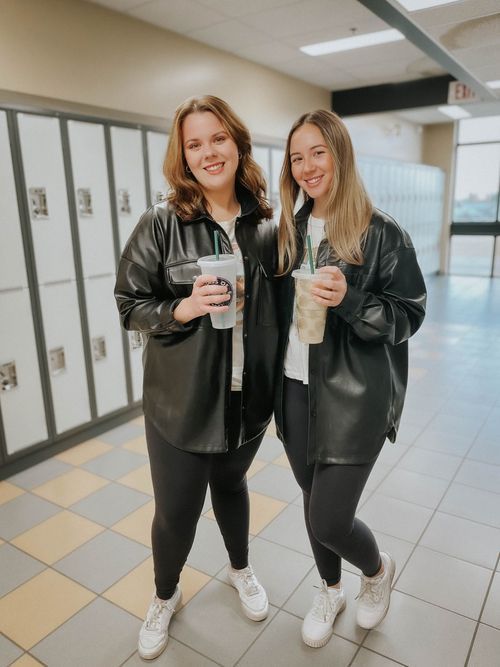
The image above showcases myself and another pre-service teacher participated in "Twin Day" during our observations!
A Summary of What I Learned During This Observation
During my field experience, I learned way more than I expected to. It’s crazy how much you can take in and grasp simply by observing the learning environment around you. I haven’t been out of high school for too long, as I graduated in 2021, but it was so different viewing things as a teacher rather than a student. There were a lot of things I observed behind the scenes before school started, between classes, and after school ended that I was not fully aware of prior to this experience. There is a lot more work that goes into being a teacher than students and parents would expect (non-stop grading, lesson planning, printing, any extracurriculars, team meetings, etc.).
My partner teacher was amazing to me. He taught me so much throughout these two weeks of observation. Often times he would explain to me what exactly he was doing and the reason as to why he was doing it. For example, he would explain to me why he did a lot of class discussions in his lectures rather than readings, as he has realized in the past that students are much more engaged when they have the opportunity to have an open discussion about the course content as opposed to reading an article and answering questions on paper. He showed me that lesson plans are not things that can be set in stone for every time you teach the course, but rather an ever-evolving concept depending on the group of students you are teaching.
I also learned the importance and application of different kinds of assessment. I got to see how the humanities department structures their exams and summative assignments to focus on student’s critical thinking, analysis, and comprehension, compared to just memorization. This format of summative assessment ensures that students are actually working to understand their studies rather than simply remembering it. As for formative assessments, I had the opportunity to observe a “spaced learning” activity (similar to L to J), which is like a small quiz to find out what students understand so far, giving the teacher feedback as to what learning targets he needs to work a bit more on. Additionally, there is a lot of formative assessment don within summative assignments as student-teacher feedback within these assignments is a crucial component (ex: teacher feedback on student’s rough copy essays). I also realized the importance of common assessment between instructors to ensure a level playing field for all students.
Additionally, I had the opportunity to lead a few class activities during this observations. It was so amazing to interact with the students! This field experience was amazing and definitely re-assured me that I am working to pursue the right career.